
The Hidden Heroes of Spring Valley

By Julie Oakes, The West Side Newspaper
EVENT: Spring Valley Fire District’s First Annual Community Appreciation Open House
WHAT: Free hot dogs, drinks and treats with the firefighters; kids’ activities; fire truck tours.
WHEN: 10 a.m. to 2 p.m. Saturday Sept. 12
WHERE: 2750 Zena Road, Lincoln
INFO: Call 503-485-2023 or info@springvalleyfiredistrict.org
When we think of volunteer work, it’s usually filling food boxes, sorting thrift donations, or helping seniors run errands. Noble tasks, but easily done and at no risk.
As opposed to jumping out of bed in the middle of the night to race to a car accident where severely injured people need critical care. Or running into a 1,000-degree burning building packing 100 pounds of gear and coming out at the end of the day 10 pounds lighter due to body sweat. Or getting the call that your neighbor down the lane is in cardiac arrest and you are going to be the first one on scene. None of it easy, all of it risky.
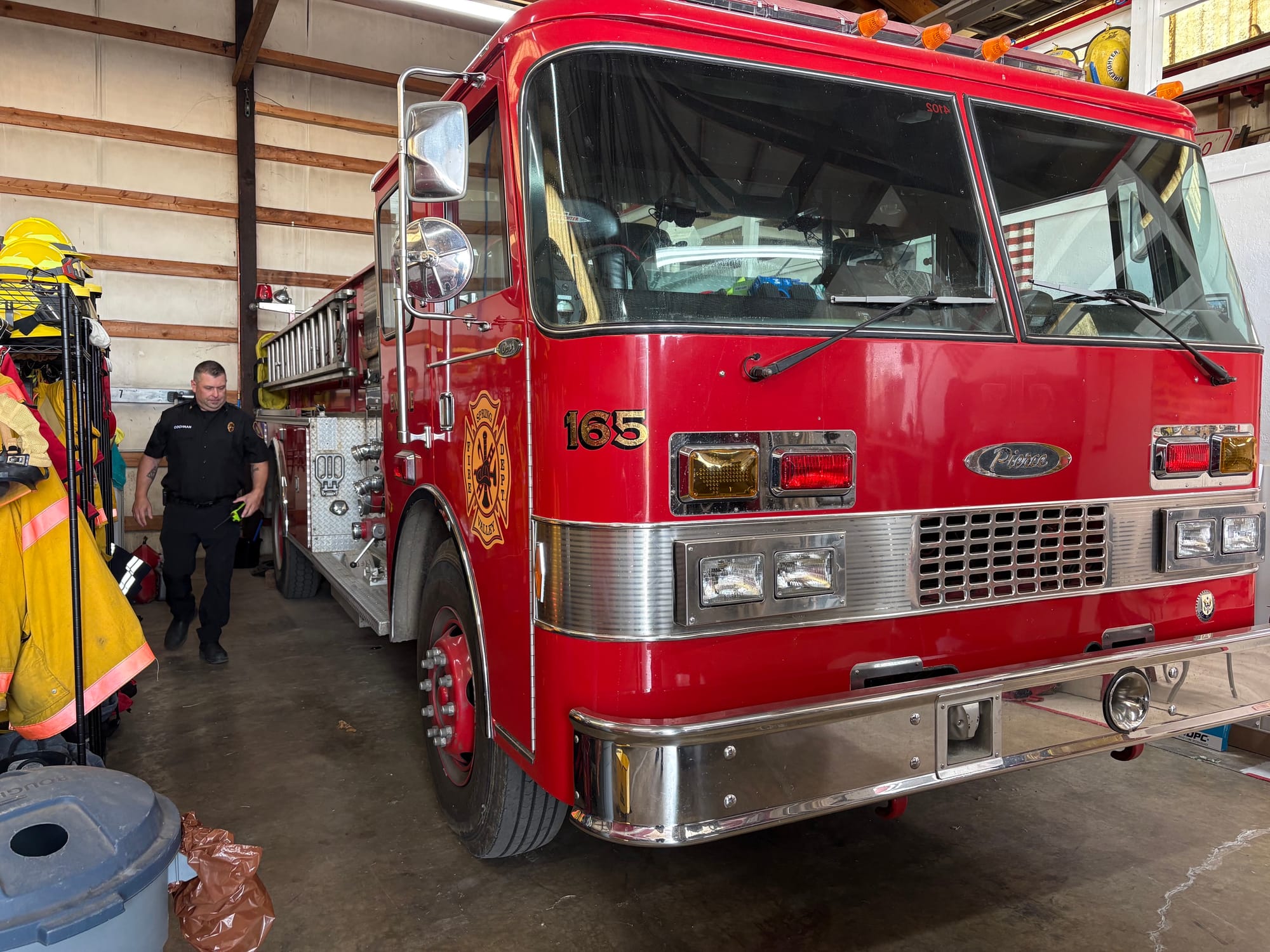
Which makes one wonder why any sane person would be a volunteer rural firefighter or medic. Especially as it requires a lot of training, you could die, the pay is lousy, and you will be traumatized and possibly physically injured. And you don’t even get to use fire hydrants like paid firefighters in the city.
It’s a big ask.
“We do all the stuff that paying departments do, but we do it for free,” says Tom White, chief of the Spring Valley Fire District.
White and the other 21 volunteers are holding an open house this month to show the public what they do, raise money, and recruit new volunteers. The open house will be at the district station in Lincoln, which sits in the center of the district’s 23 square miles stretching from West Salem to Oak Knoll Road, to the Willamette River and the Eola hills. The district has 1,300 residents.
White is a veteran in several ways. He has been with the district for 47 of its 48 years in operation. He served in the military in Vietnam and is a National Guard member. Being chief is a comparative walk in the park. “I got horror stories you can’t print,” White says, knowingly.
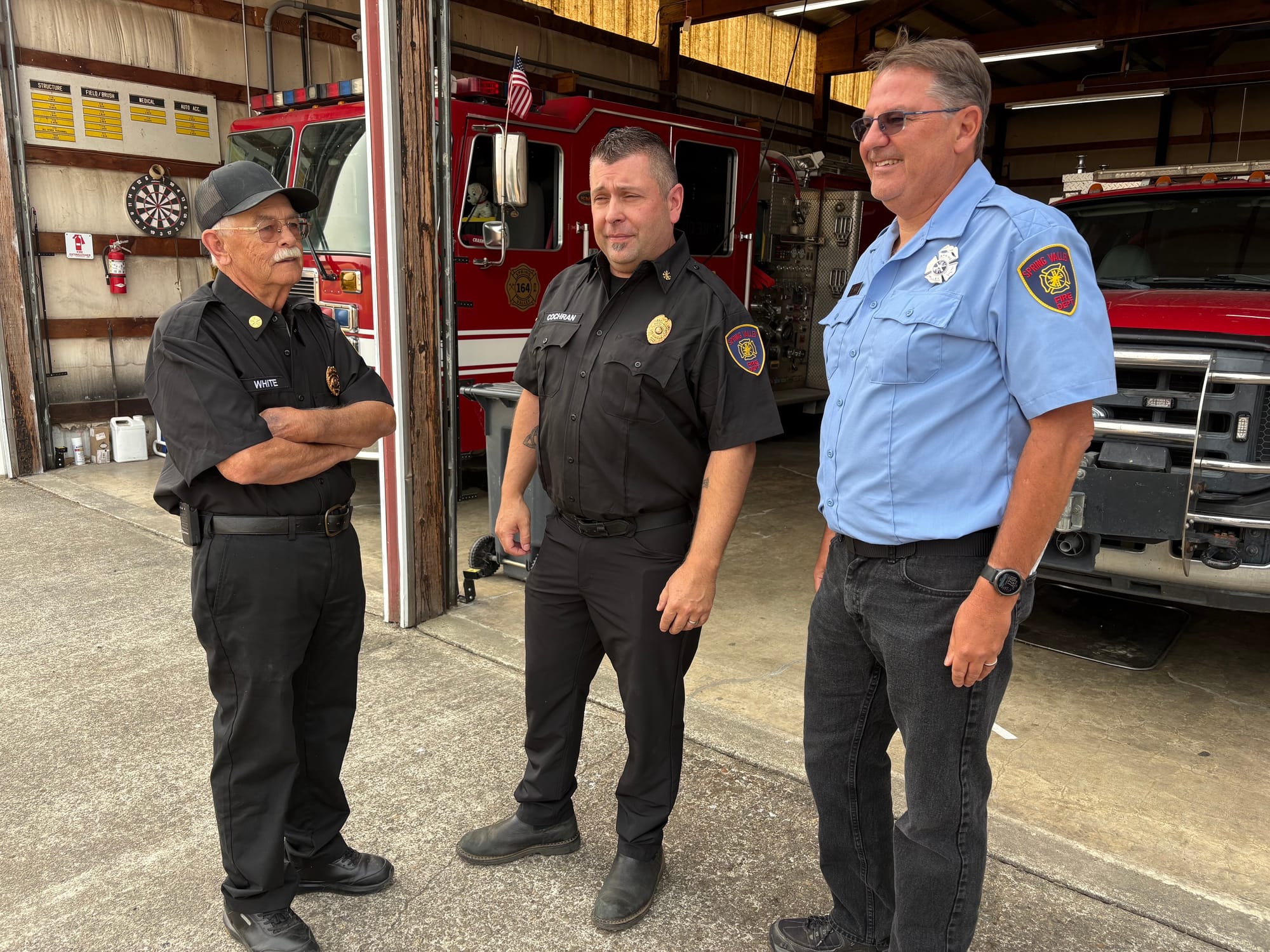
With him are Shaun Cochran, assistant chief, and 20 other volunteers – including five women – ranging in age from 18 to 76. Cochran works in IT at Home Depot, while another is a state employee, another a home caretaker, a few others carpenters and a recent high school graduate. More than half the group has medical training. They do everything from fires and medical calls to building a website to working on truck engines. Job security is high.
“AI can’t replace what we do,” Cochran says. “There is always a need for volunteers.”
The role of volunteer emergency staff in rural America is interesting. A whopping 70 percent of fire and ambulance services in Oregon are staffed entirely by volunteers, White says. That’s a huge responsibility – especially during fire season – for people who do it purely out of the goodness of their heart.
And the need grows every year, partly due to an increasingly aging population. So far in 2026 there have been 94 calls, compared with 132 calls in 2025 – a 40 percent increase. This is in addition to all the mutual assistance calls from other departments.
On the upside, structure and brush fires are actually a small percent of calls due to the public’s increased awareness. “We kind of fire-preventioned our way out of the fire business,” Cochran says. That said, the fire calls can be traumatizing, such as a recent case involving horses in a burning barn, Cochran says, somberly. The horses did not make it.
But most calls are for medical issues such as car accidents, rescues, heart attacks, seizures, falls, and the occasional dog bite. Car accidents are commonly due to cell phone use or driving under the influence. The volunteers are often the first responders on scene. They handle the medical crisis while clearing the road and directing traffic until the ambulances and police arrive.
There are fun parts of the job, though, such as year-round parades around the region. The department has seven different trucks, including a vintage 1952 GMC 620 pumper they are restoring for such events. The project will be funded by donations and is separate from the fire district’s budget, which comes from taxes, grants and donations.
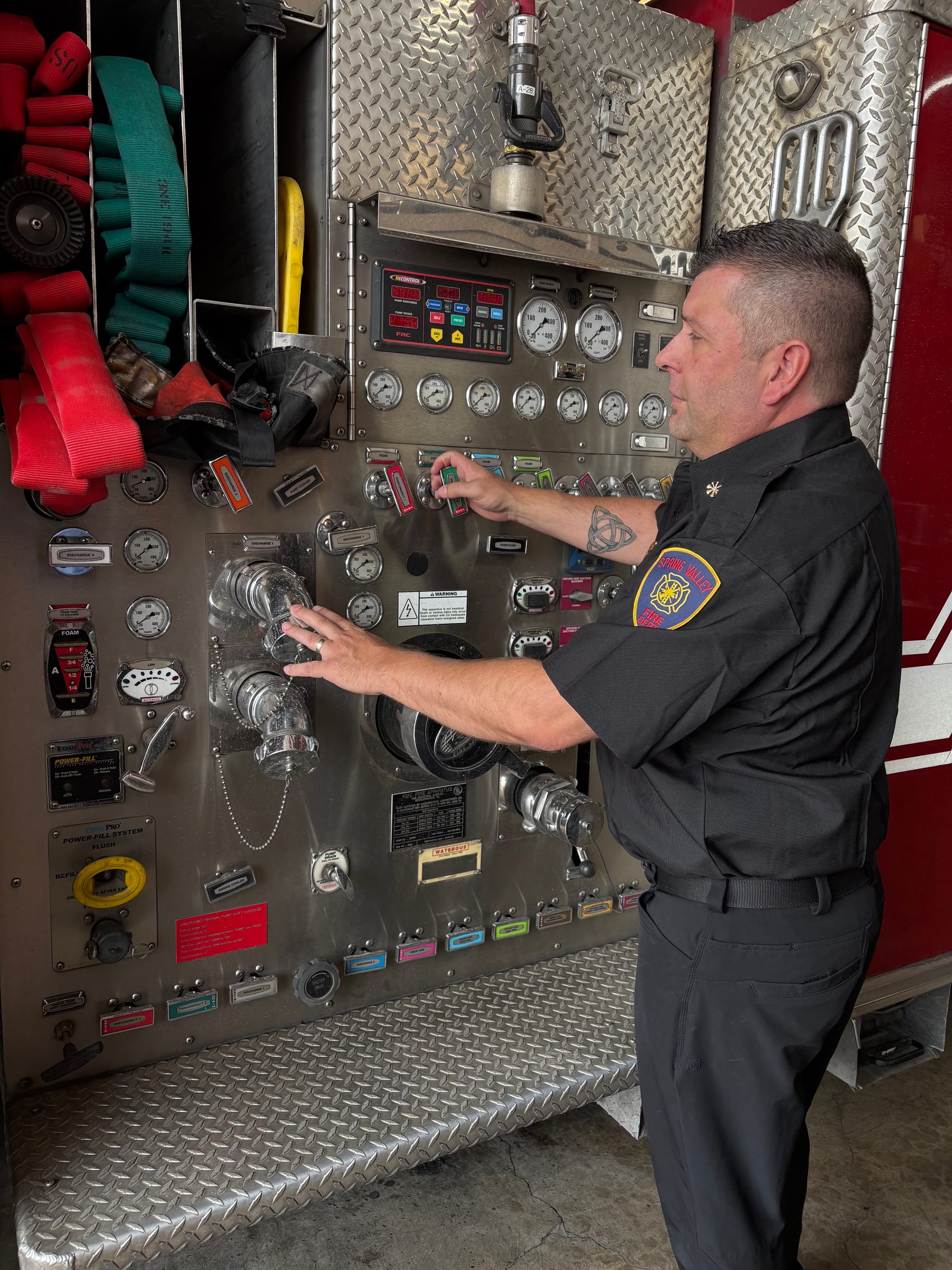
Firefighters also went to a local summer camp nearby to spray water over cancer-patient kids who wanted to “sing in the rain.”
A little-known fact about volunteer fire departments is that they can be career starters. One volunteer is becoming a doctor, and another is now the fire chief in Grand Ronde, White says. Training is the key.
Volunteers get $300 worth of firefighting training, which lasts six weeks and is free under the condition the person helps the department afterward. Same with Emergency Medical Technician and Emergency Medical Responder training, which is $1,800 and 150-190 hours for EMTs, and $200 and 48-60 hours for EMRs. Training is done on the weekends and weeknights around volunteers’ jobs and family needs. There are weekly drills and they must respond to calls.
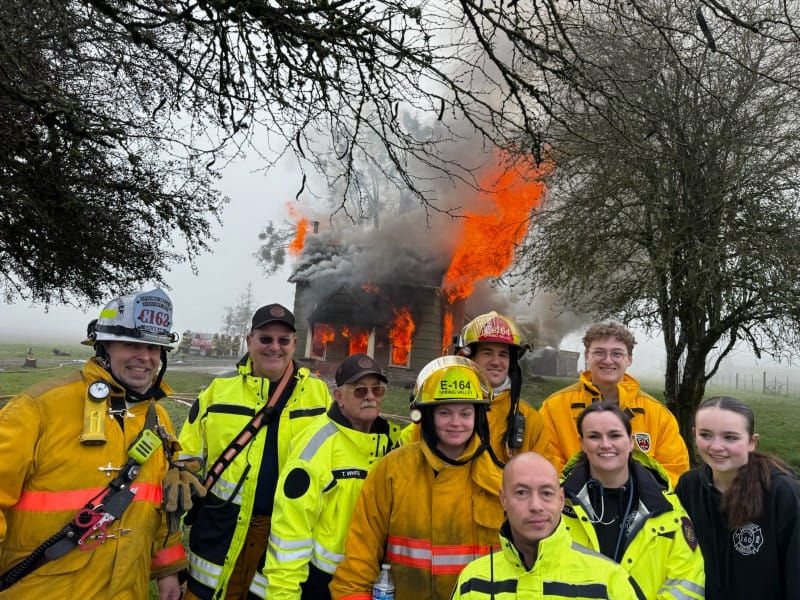
Volunteers also need to live in or close to the district, be in good physical shape and have the mental stamina to endure life-and-death situations.
So the question persists: Why would anyone sign up for this?
“I think it’s a matter of giving back to the community,” says volunteer Tim Hay, who drives the water truck, does public outreach, and is an EMR. “It makes us feel a part of something. The station is family and it extends to other districts.”