
The Humongous Fungus
By Thistle Nelson, For The Westside Newspaper
We live in a great big beautiful world. I may be biased, but I'd go as far as to say that our planet is the greatest place in the galaxy. One of my favorite things about our home is all the different ways life presents. I'm fascinated by the tardigrade, the microscopic creatures that can survive anything, even the cold vacuum of space. And how about the blue whale? Their extraordinary size and beauty is a sight to behold. The blue whale holds the record for largest animal by length, 108 feet. But it isn't the largest living thing on the planet.
As it turns out, that living thing isn't an animal or a plant: it's a fungus, and it lives right here in Oregon. The largest known organism on Earth by both area and mass is a fungus called Armillaria ostoyae, often referred to as the “humongous fungus.” It covers over 2,385 acres and is estimated to weigh 35,000 tons. This organism is located in Malheur National Forest in Oregon. It is believed to be at least 2,400 years old. It is a clonal colony, meaning it is a single organism that has spread over an enormous area through its root-like structures, called rhizomorphs.
You may be wondering, “Wasn't the world's largest organism that big tree in Utah?” and to that, I say “Wow, you’re good at obscure knowledge.” Yes, the largest organism on the planet was thought to be the clonal colony of quaking aspen trees in Utah named Pando. After the discovery of the Armillaria Ostoyae, there was much debate on which of the two was larger. But they did eventually find that Oregon’s fungus was bigger. Pando’s area is only 108 acres and an estimated 6,000-10,000 tons.
The discovery of this huge fungus was both surprising and awe-inspiring to the scientists responsible for this discovery. It challenged and expanded our understanding of that which comprises an individual organism. It sparked debate about the definition of life and individuality in biology. It provided new insights into ecosystem resilience, forest health, and the complexity of subterranean fungal networks, which are now recognized as critical components of forest ecosystems.
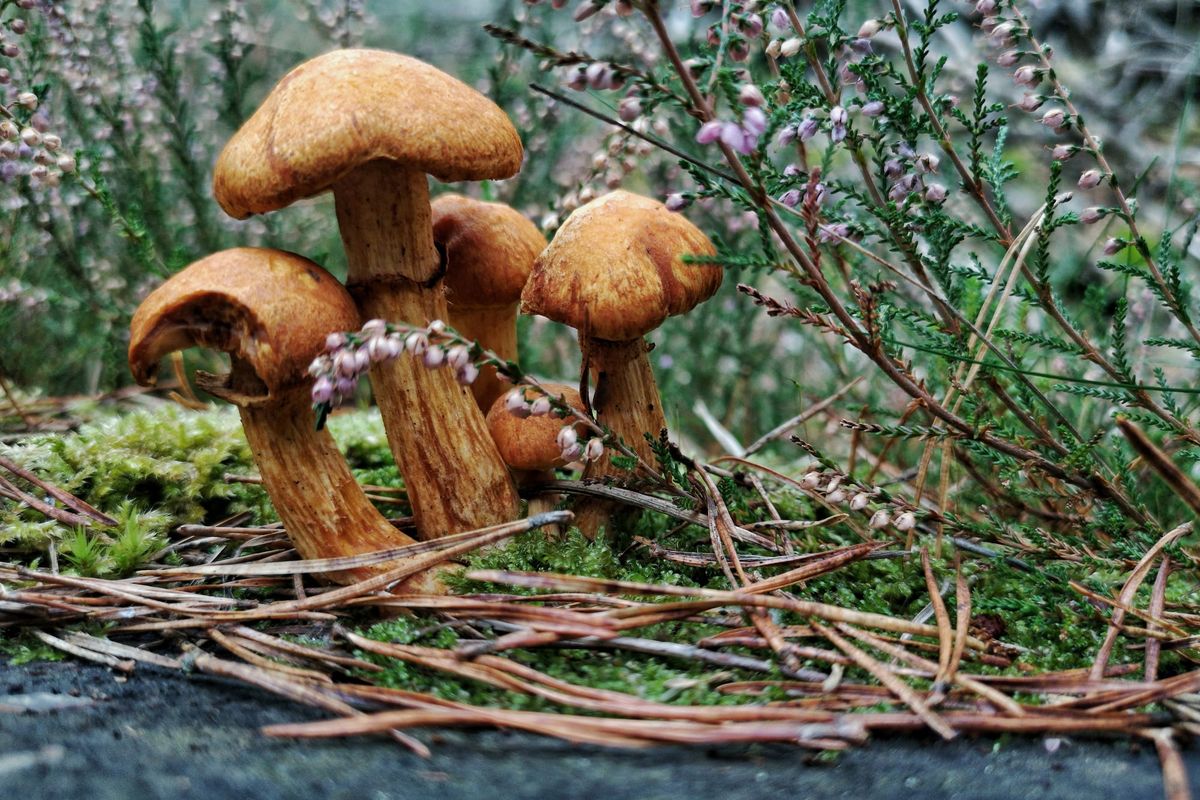
The research team that discovered it was led by Dr. Catherine Parks and Dr. Myron Smith. The researchers first noticed several clusters of honey mushrooms growing around the forest (Armillaria ostoyae). They took samples from different areas and used DNA printing to compare their genetic material and they found that it was one and the same – not siblings, but identical. This led to further studies and extensive research to map the entire organism.
Our planet is a breathtaking testament to the wonders of life. The biodiversity of earth never fails to make one question what is and is not possible. If you ever have a need to drive out to eastern Oregon, you should definitely make a stop at the Malheur National Forest so you can walk on top of the world's largest living organism. That's definitely going on my bucket list. I may not be able to see it without x-ray vision, but just knowing that such an eerie, colossal thing is living there in that forest sparks my sense of wonder.