
The Whole Tooth: Why Dental Numbing Isn't as Bad as You Think
By Wallace Dick, DDS, For The West Side Newspaper
Let's be honest, most people appreciate local anesthesia when the dentist is repairing a tooth. What they don't enjoy is leaving the office with half their face feeling asleep for the next few hours. After more than 30 years in dentistry, I'd estimate that about one-third of patients dislike being numb, one-third simply tolerate it, and one-third aren't bothered by it at all.
Imagine dentistry without local anesthesia. Even a small filling could be extremely painful. Untreated cavities would continue to grow, eventually reaching the nerve inside the tooth and causing severe pain. At that point, the only options might be a root canal or removing the tooth. Without local anesthesia, these procedures would be nearly impossible for most people to tolerate.
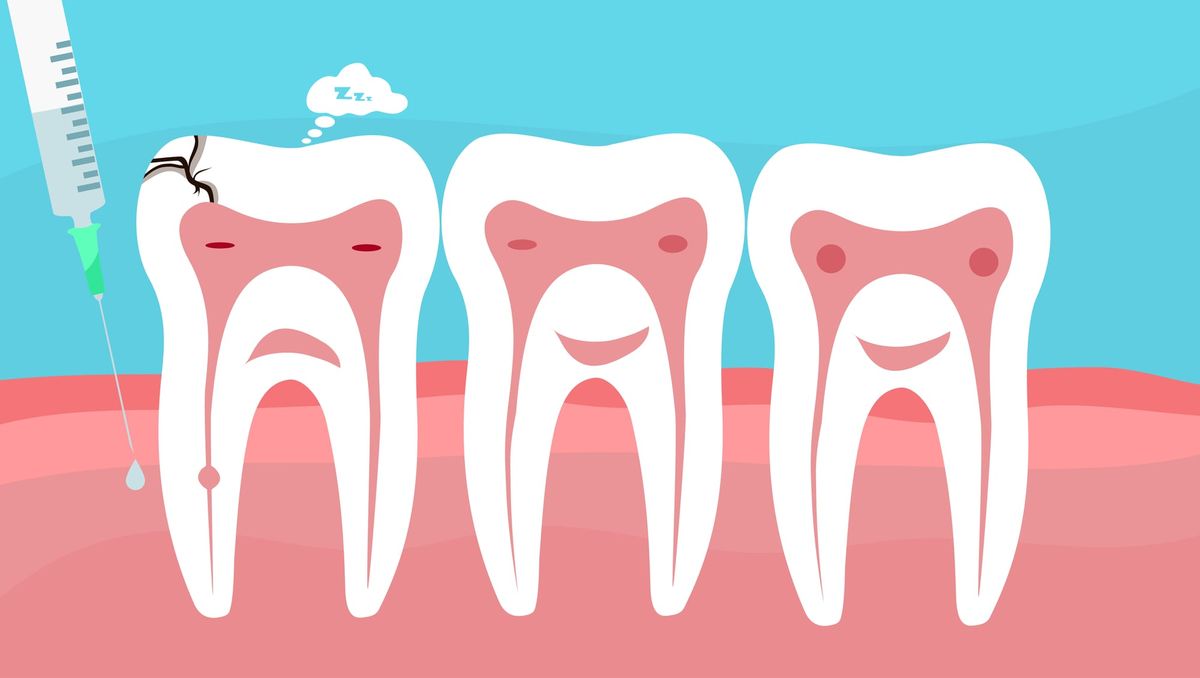
The numbing process actually begins before the needle. Your dentist usually places a topical anesthetic on the gums with a cotton swab to numb the surface tissue. This helps make the injection itself much more comfortable.
Dental anesthetics have come a long way. Before modern medicine, alcohol and narcotics were sometimes used to dull pain, often with poor results and serious risks. In 1905, German chemist Alfred Einhorn developed procaine, better known as Novocain, which revolutionized dentistry. Then, in 1943, lidocaine was introduced. It worked faster, lasted longer, and caused far fewer allergic reactions than Novocain. Today, lidocaine and similar anesthetics remain the standard of care.
Many people assume the needle is what causes discomfort. Surprisingly, much of the brief sting comes from the anesthetic solution itself. These medications are slightly acidic, while our body's tissues are close to neutral pH. That difference creates the familiar burning sensation as the anesthetic is injected. Fortunately, our bodies have a natural buffering system that quickly neutralizes the acidity, allowing the anesthetic to work and the numbness to set in.
An even newer advance is buffered local anesthetic. Just before the injection, a special buffering solution is mixed with the anesthetic, making it much closer to the body's natural pH. For many patients, this significantly reduces the sting of the injection. We use buffered anesthetic in our office for many of the more sensitive areas with excellent patient satisfaction.
Even without buffered anesthetic, dentists can improve comfort simply by injecting the anesthetic slowly. This gives the body's natural buffering system more time to work, making the experience gentler.
The next time you need a filling or another dental procedure, remember that a few hours of numbness are a small price to pay for comfortable, pain-free treatment.