
West Salem Braces for Bridge Traffic as ODOT Starts Seismic Retrofit
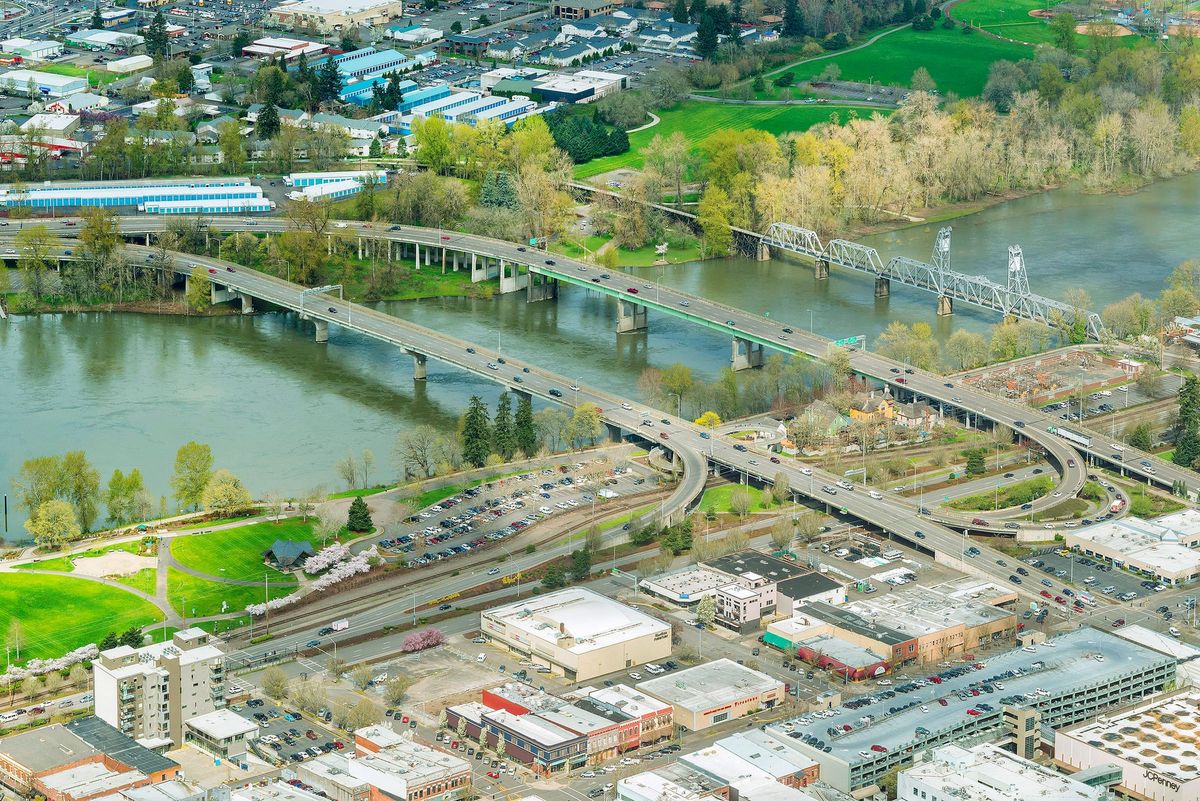
Project to Fortify Center Street Bridge Against Magnitude 9.0 Quake Will Take Years
By Dan Shryock, The West Side Newspaper
Get ready, West Salem. Crossing the Center Street Bridge is going to get very difficult.
That’s the clear message from the Oregon Department of Transportation before work begins as early as this fall to reinforce the bridge against a major earthquake.
“We’re not going to sugarcoat it,” Anna Henson, ODOT’s Area 3 manager, told West Salem Business Association members recently. “Traffic will be bad.”
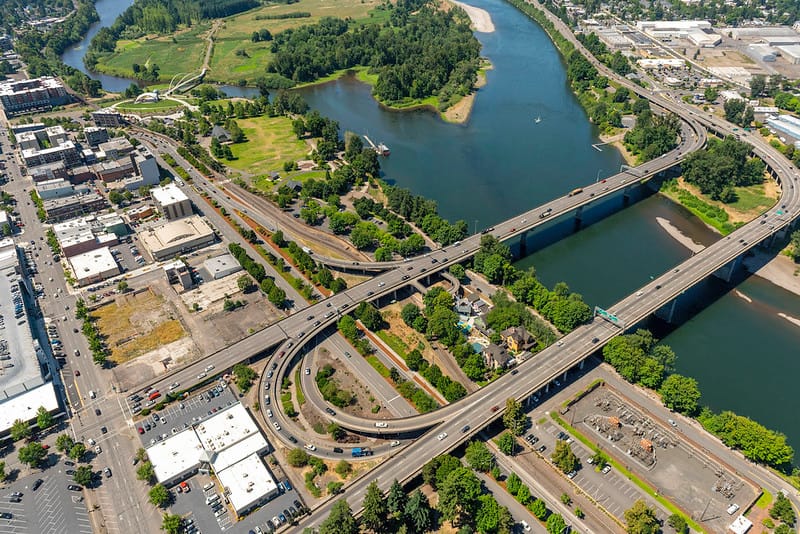
Henson and Jared Trowbridge, a team project manager with DOWL, the state’s transportation engineering consultant, outlined for the group a six-year seismic retrofit of the Highway 22 bridge from Polk County to downtown Salem. They emphasized that the work, while disrupting for West Salem residents, is necessary.
The goal is to make sure the key span can withstand a magnitude 9.0 earthquake. The work, however, will require lane closures, delays, and brief, complete, middle-of-the-night shutdowns.
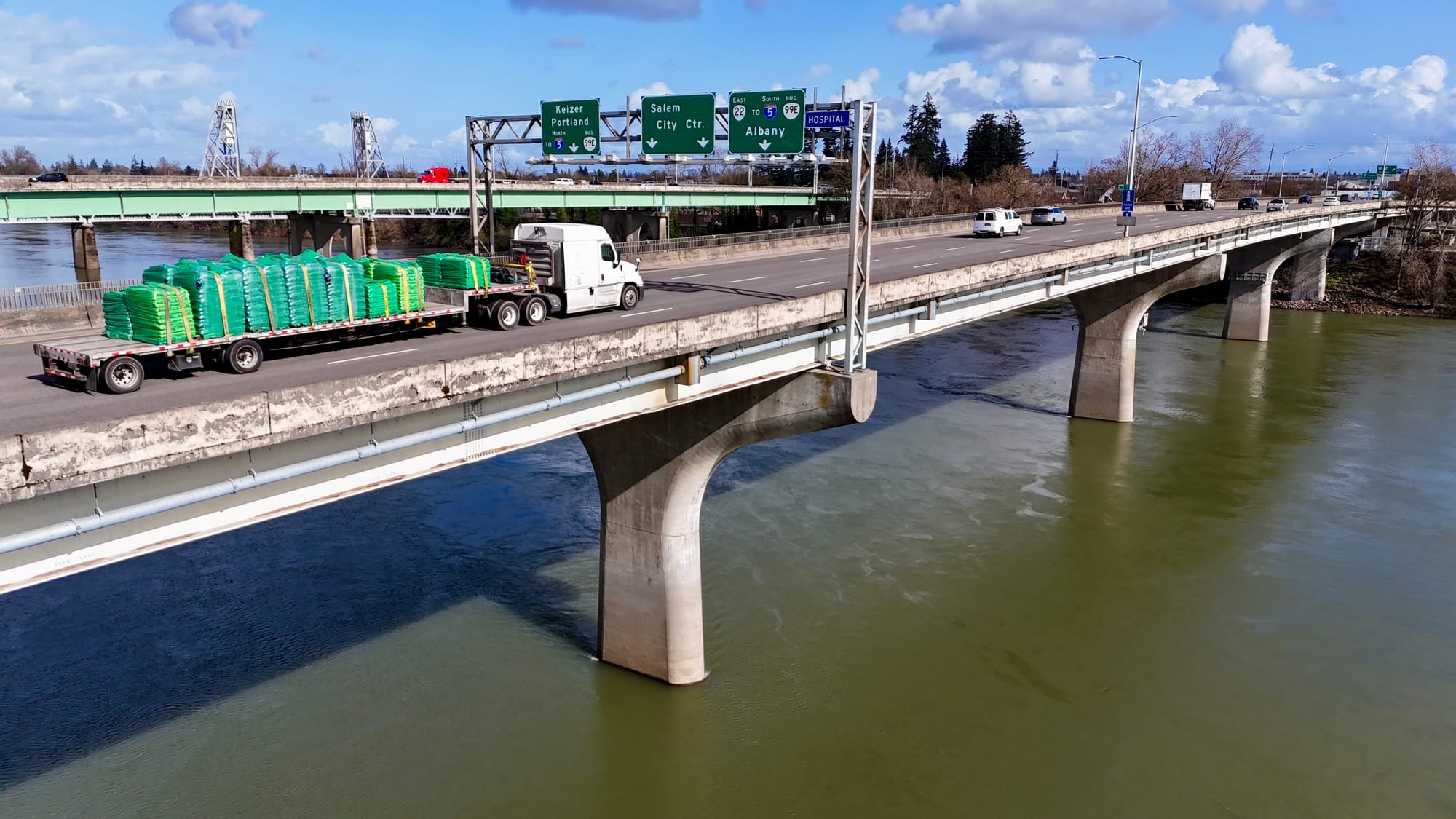
The west-to-east bridge, built in the 1980s, is a primary Willamette River crossing. Should an earthquake damage the bridge, West Salem would be cut off from Salem Hospital, emergency services, and direct access to Interstate 5. The retrofit project is intended to strengthen the structure so it can absorb a tremor’s force and remain open.
Marion Street Bridge, the east-to-west counterpart built in the 1950s, is not included in this work.
The threat prompting the work is the Cascadia Subduction Zone, a set of faults that stretches from the Canadian border to California beneath the Pacific Ocean floor. Scientists estimate an earthquake could trigger shaking measuring 9.0 on the Richter Scale, the common measurement for seismic magnitude. For comparison, the deadly 1989 Loma Prieta earthquake in the San Francisco Bay Area that damaged bridges and highways was measured at 6.9 magnitude.
Once upgraded, the Center Street Bridge “will meet current seismic engineering standards and earthquake models associated with a Cascadia Subduction Zone event,” ODOT spokesperson Mindy McCartt said in an email. “Rather than designing to a specific magnitude number, engineers design for the expected ground shaking and forces that the bridge would experience during a major earthquake.
“The goal is to improve the bridge's ability to remain functional and support emergency response after a significant seismic event,” she said.
This long-term gain comes at a price, however. A three-year Phase 1 project will cost more than $180 million, Henson told the business association. Costs for Phase 2, another three-year effort, are not yet known.
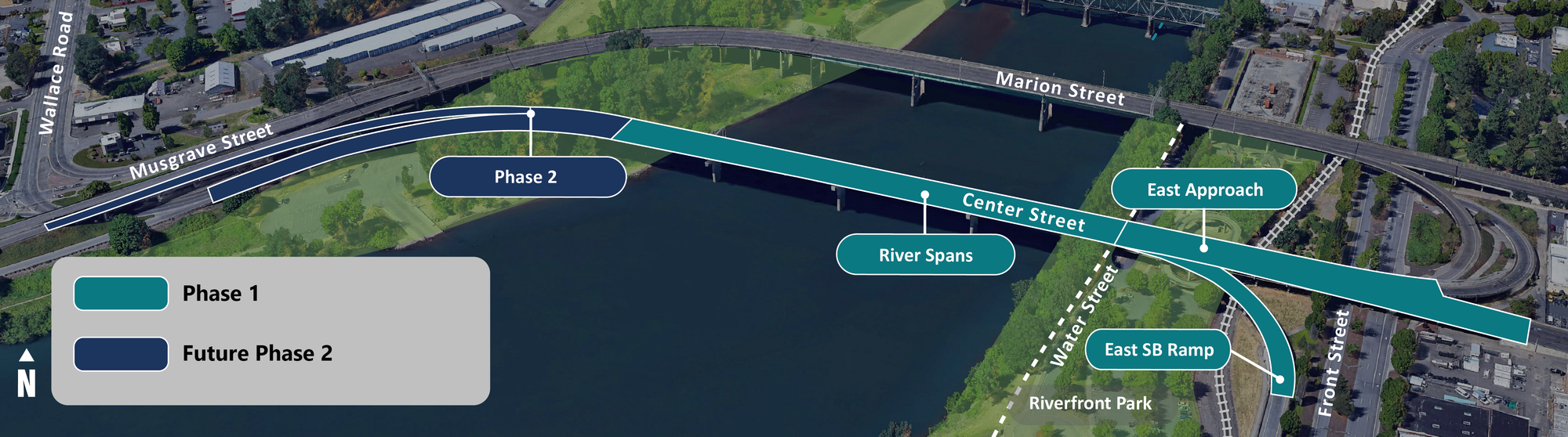
Phase 1 focuses on reinforcing the bridge span, the eastern approach, improving footings submerged in the Willamette River, and upgrading the eastbound off-ramp that flows traffic south to Front Street.
At the same time, according to the City of Salem website, ODOT, and the city will replace a 24-inch waterline under the bridge that supplies West Salem with drinking water. A new 36-inch line better equipped to withstand a major quake will be installed.
Construction is expected to begin late this year or early 2027, McCartt said. Most of the work during this phase will be done under the bridge and while traffic will generally be normal on the bridge itself, drivers should expect lane restrictions, ramp closures, and a few nighttime closures.
Phase 1 work is expected to include:
- Lane closures on northbound Front Street for up to three months.
- A ramp closure from Front Street up to the Marion Street Bridge for as long as three months.
- One or two night-time closures on southbound Front Street.
- Additional closures beginning in 2029 including along eastbound Center Street.
Phase 2 work targeting the bridge’s western approach is expected to include lane closures on Highway 22 and Wallace Road beginning in 2033, McCartt said. That timing is based on early planning, however, and may change.
“We know this project will affect daily travel. During some phases of construction, travelers can expect extended lane closures, ramp closures, and nighttime full closures,” McCartt said. “For a family traveling between West Salem and downtown Salem, that may mean longer travel times, adjusting schedules, combining trips, teleworking when possible or considering transit, ridesharing, or other transportation options.”
ODOT and the city, meanwhile, are preparing plans that include detours and possible traffic signal timing adjustments, McCartt said, but other options are limited because there are very few ways to cross the Willamette River. The two nearest crossing options are the Independence Bridge on River Road South and the Willamette River Bridge between St. Paul and Newberg.
The Wheatland and Buena Vista ferries, operated by Marion County, serve only a few vehicles at a time and service is dependent on river conditions.
“ODOT is implementing a Transportation Options Campaign to promote ridesharing, vanpooling, and transit,” McCartt said. “The public outreach team will use email updates, social media, (the networking app) Nextdoor, the project website, and other communication channels to encourage travelers to consider alternative transportation options and adjust travel times when significant impacts are expected.”

For information on the project, see ODOT information at https://direc.to/mE6d or scan the QR code with a phone.